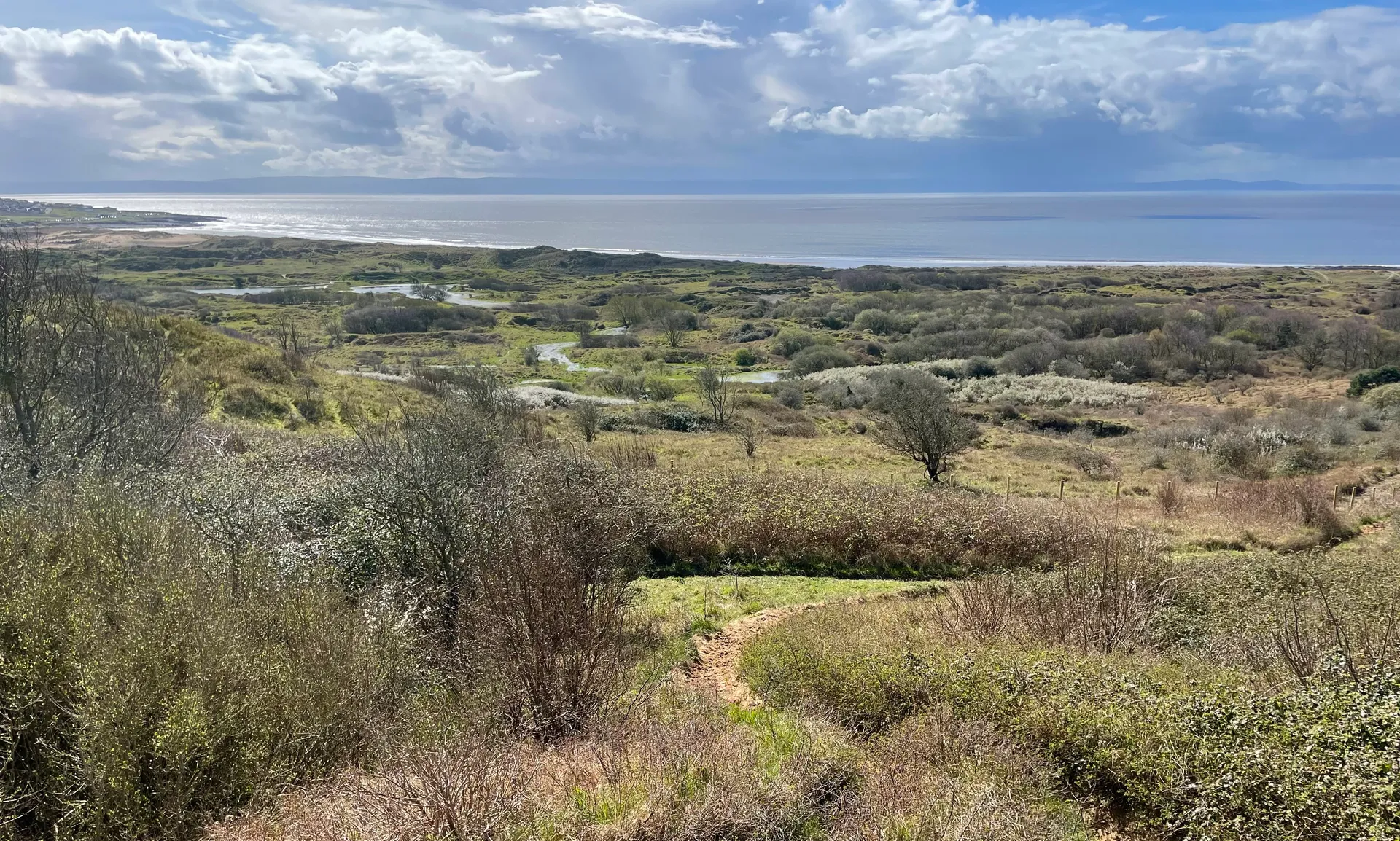
A Remnant of One of Europe’s Largest Dune Systems
Merthyr Mawr Warren National Nature Reserve is a remnant of what was once one of the largest dune systems in Europe, stretching from the Ogmore estuary in the east to the Gower peninsula in the west.
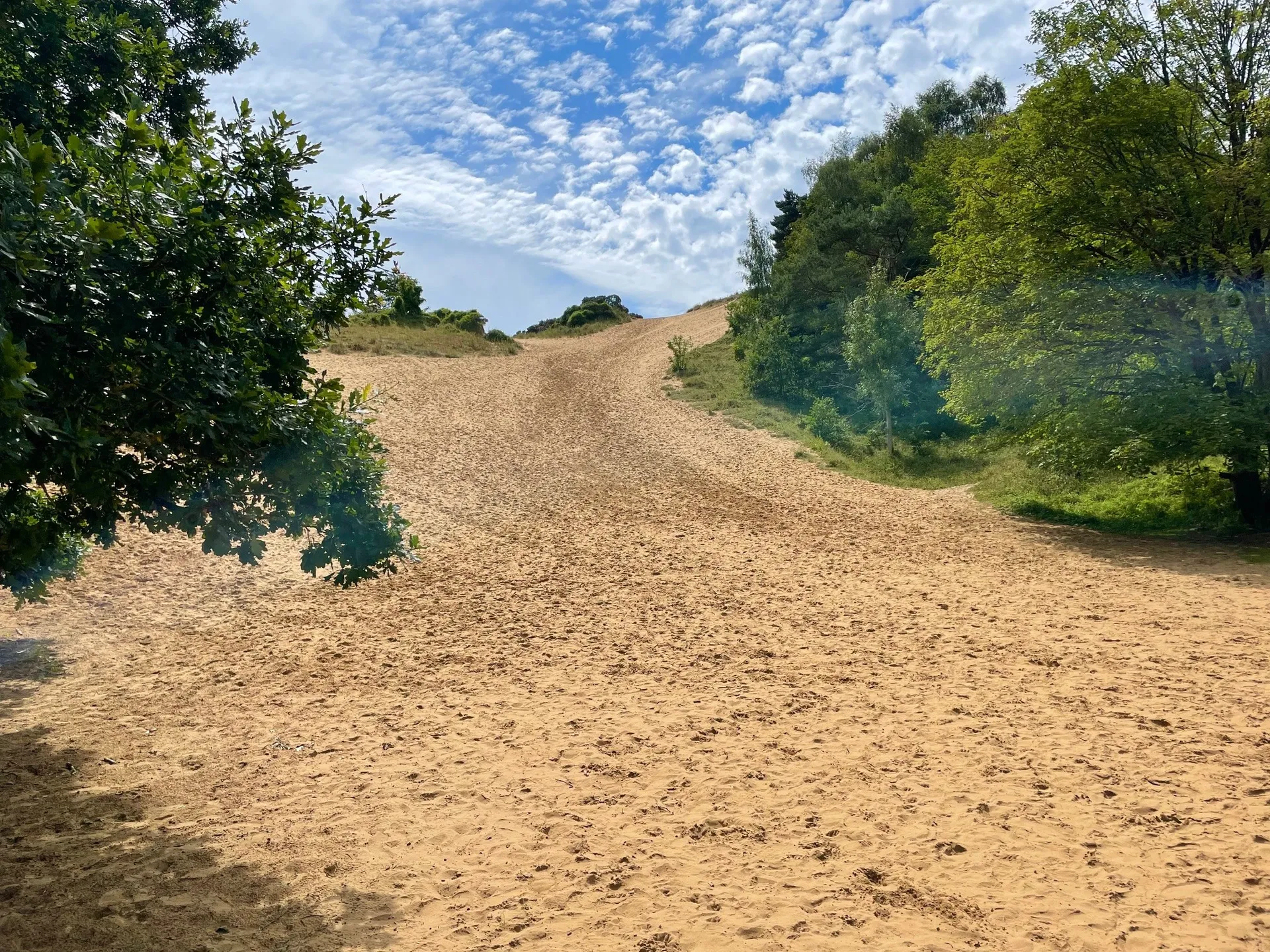
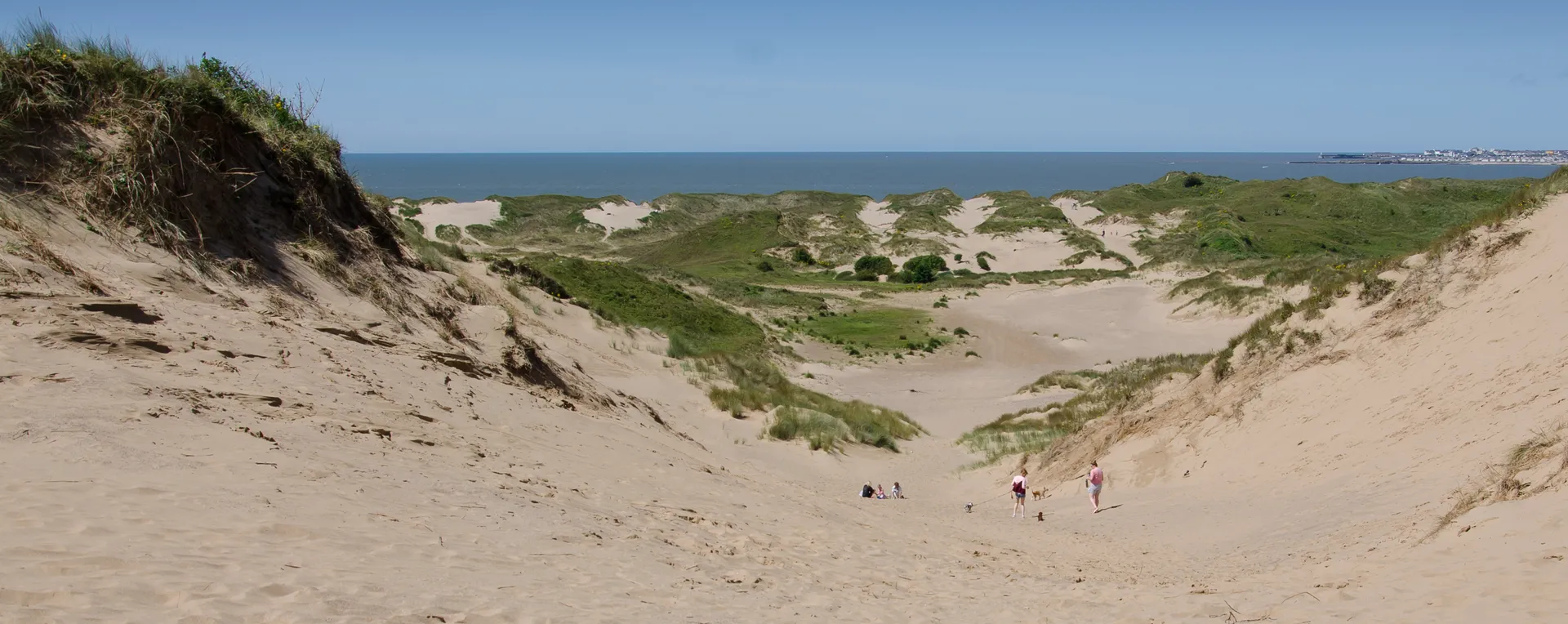
The dunes were formed in stages during a succession of stormy periods which began during the late Neolithic era when the lower part of the Reserve started to be covered by sand. However, it was not until the 13th and 14th centuries that shifting sand blown inland by a series of violent storms covered the limestone plateau that runs across the Reserve from west to east. This created what are the second-highest dunes in Europe, including the 200m high ‘Big Dipper’, the largest dune on the Reserve.
A Continuous record of Human Settlement
Despite the encroachment of the sand, the area has a long and continuous history of habitation with archaeological finds dating back to the late Neolithic period and early Bronze Age, the Iron Age, and through to later Roman occupation. As a result of this rich archaeological history, a large part of the Reserve is now a designated Scheduled Ancient Monument.
A quarter of all Welsh flora species can be found within these 840 acres.
National Nature Reserve · SSSI · SAC
Managing an Active Dune System
Over the last three quarters of a century, the dunes have seen a dramatic change in character from a landscape consisting largely of mobile, drifting sand, to what is today a highly vegetated and stabilised landscape.
Managed in medieval times as a productive rabbit warren with a full-time warren keeper, the large rabbit population kept vegetation cover to a minimum. More recently, the devastating impact of myxomatosis from the 1950s onwards decimated the population and allowed vegetation to establish a firm foothold.
While some of the resulting habitats such as the limestone grassland provide an important refuge for rare insects and flora, a key part of the management of the Reserve includes the destabilisation of the sand nearest to the sea. This has re-introduced some of the dynamic movement of sand that provides a crucial habitat for a number of rare insects and flora that inhabit the dunes.
Elsewhere, grazing livestock, mechanical mowing and the recovering rabbit population help to keep rank vegetation at bay and provide habitats for the rich variety of flowers. This tapestry of flowers characterises the Reserve especially during the summer months, and represents a quarter of species of flora native to Wales.
A Mosaic of Rare Habitats
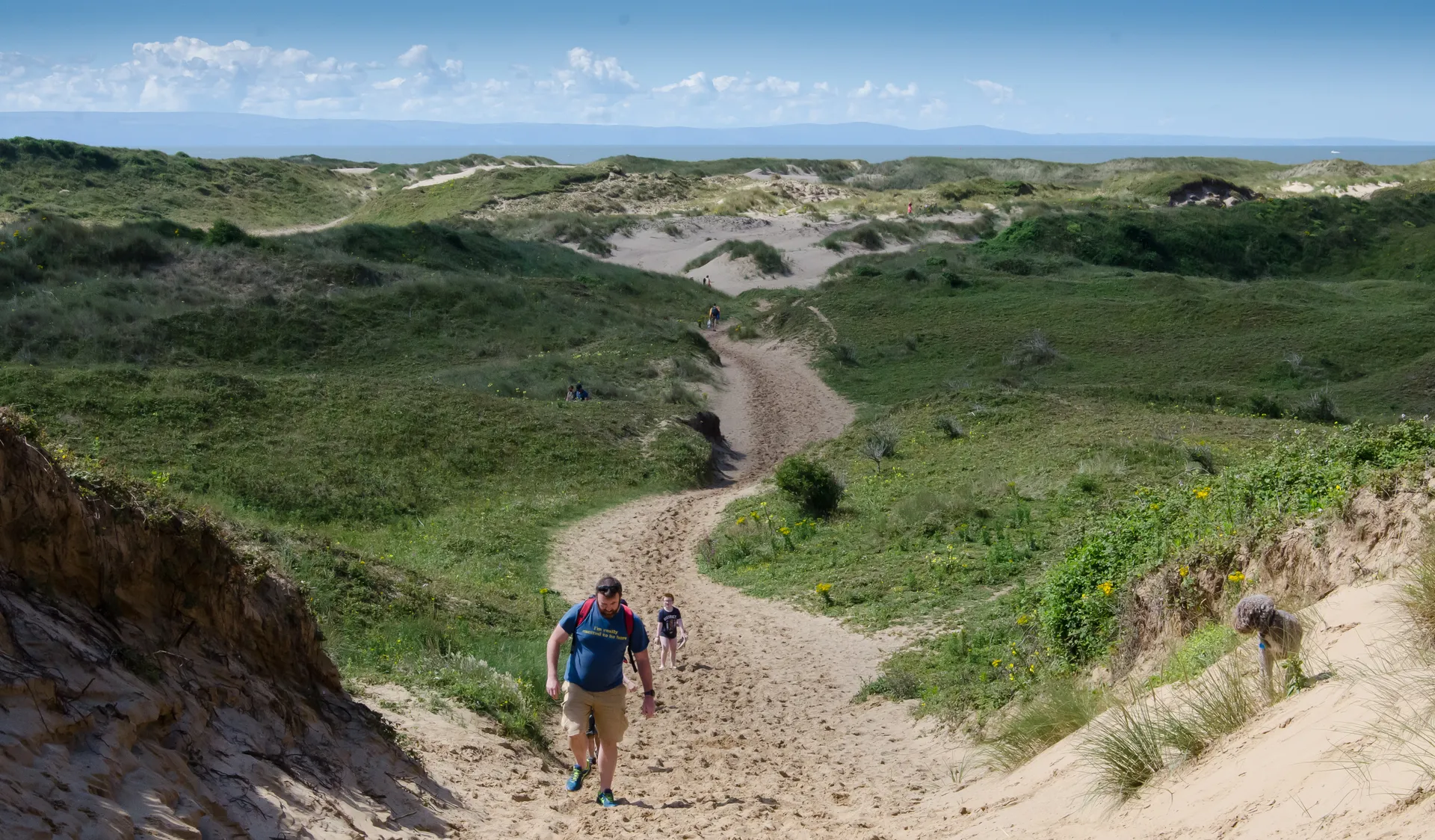
Mobile Sand Dunes
Dynamic dunes with shifting sand providing a nursery for small vascular plants and invertebrates.
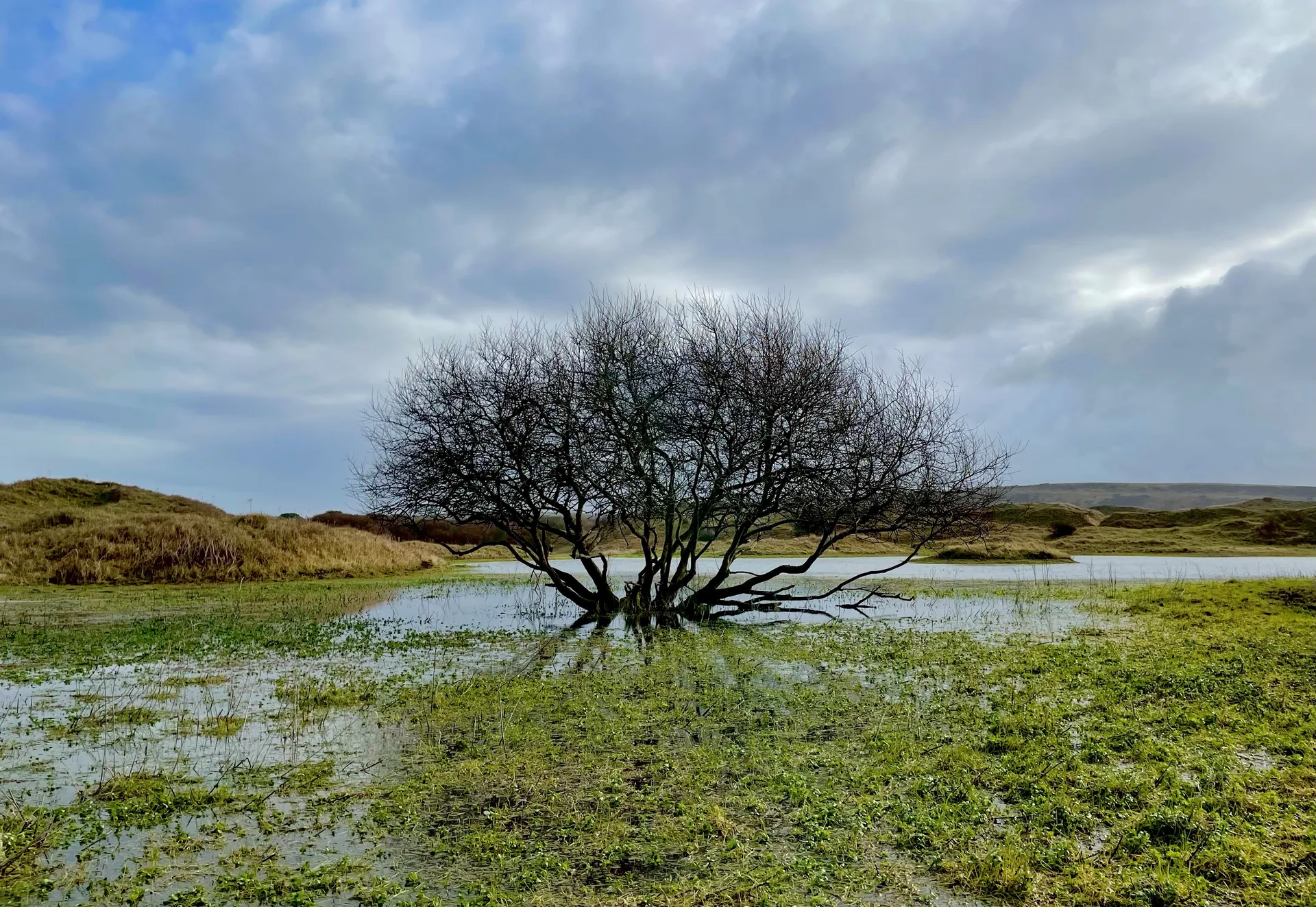
Dune Slacks
Damp hollows between dunes are an ephemeral freshwater habitat and a refuge for rare petalwort.
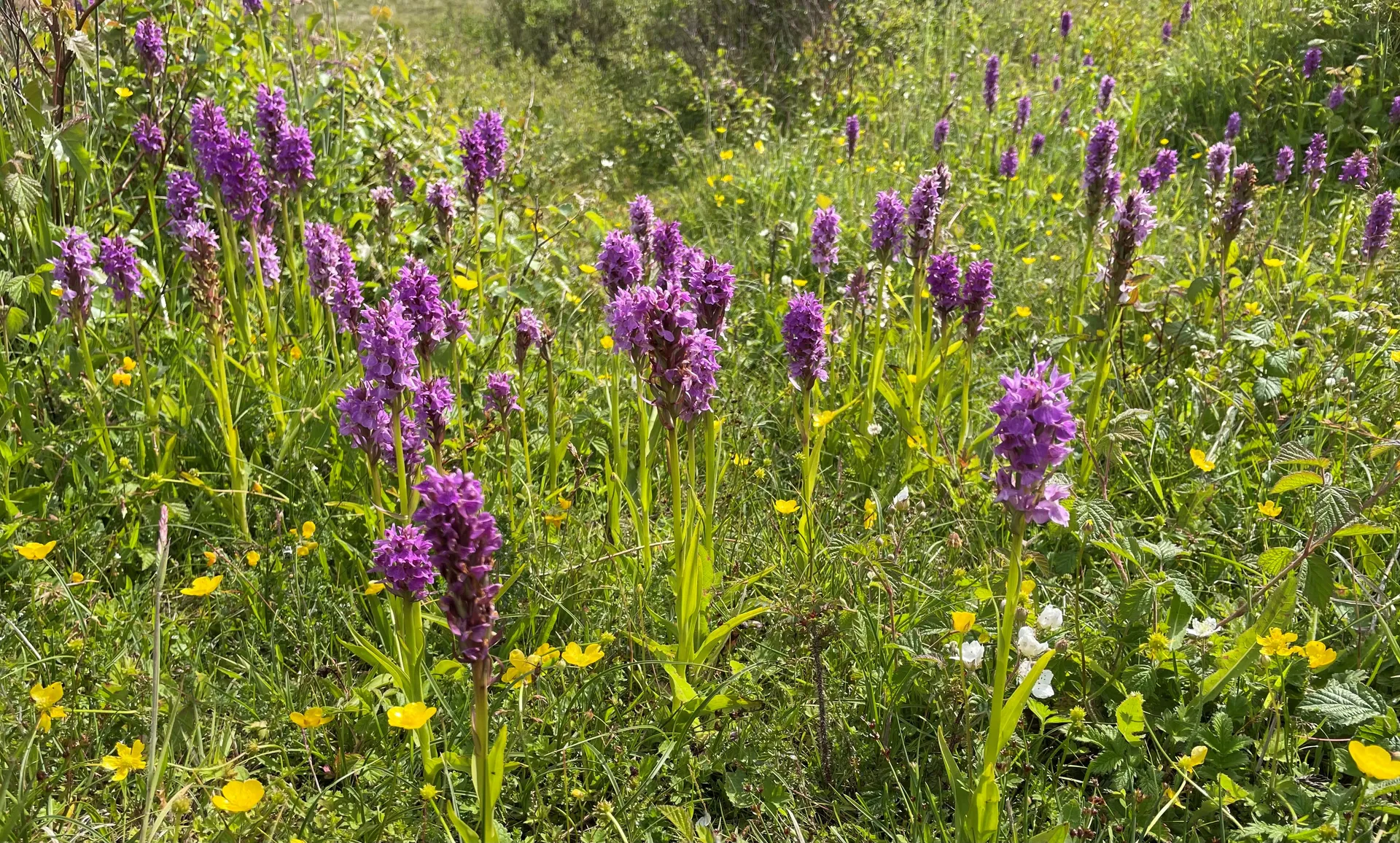
Limestone Grassland
Thin soils over ancient limestone support a carpet of wildflowers attracting a range of insects and pollinators.
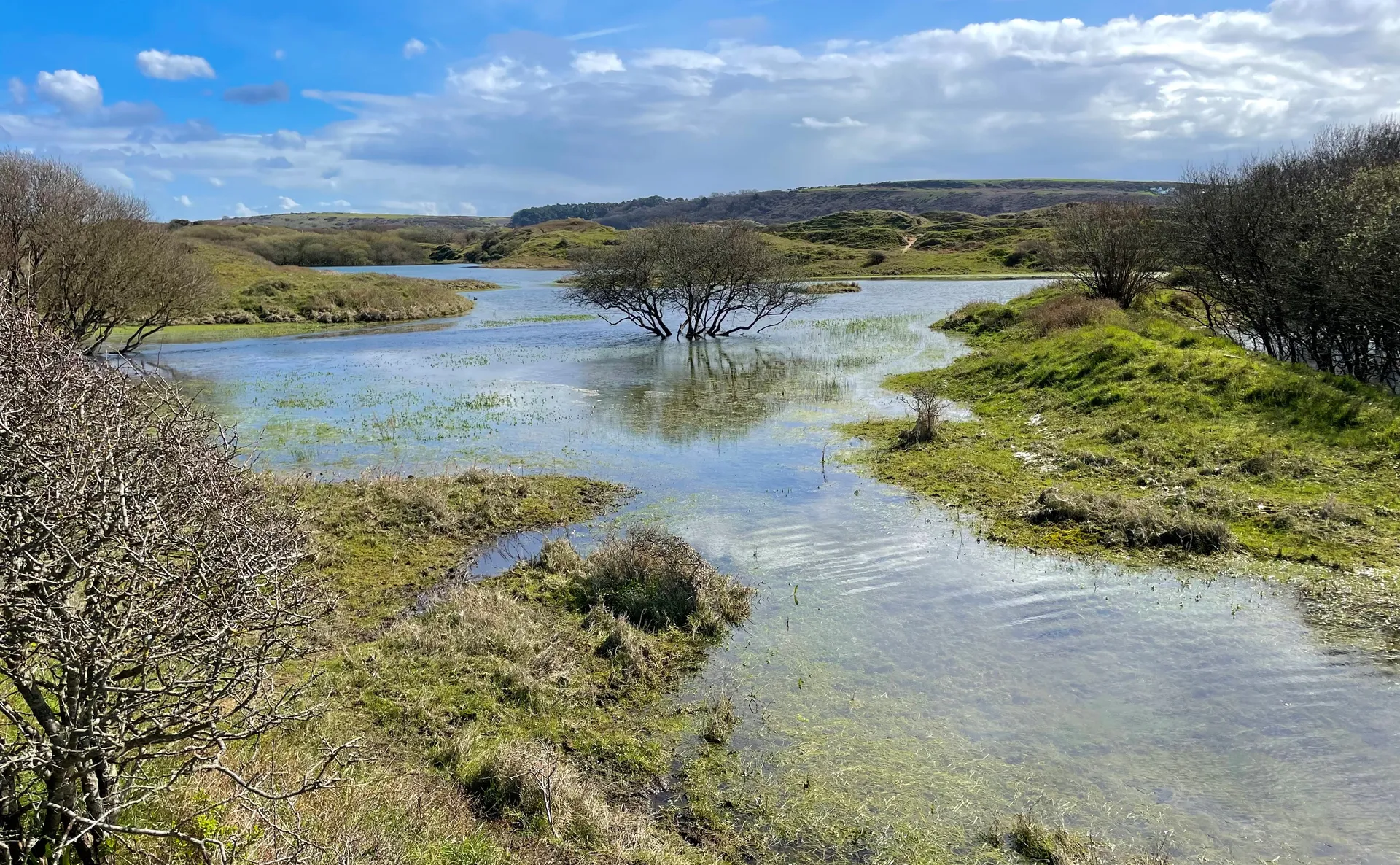
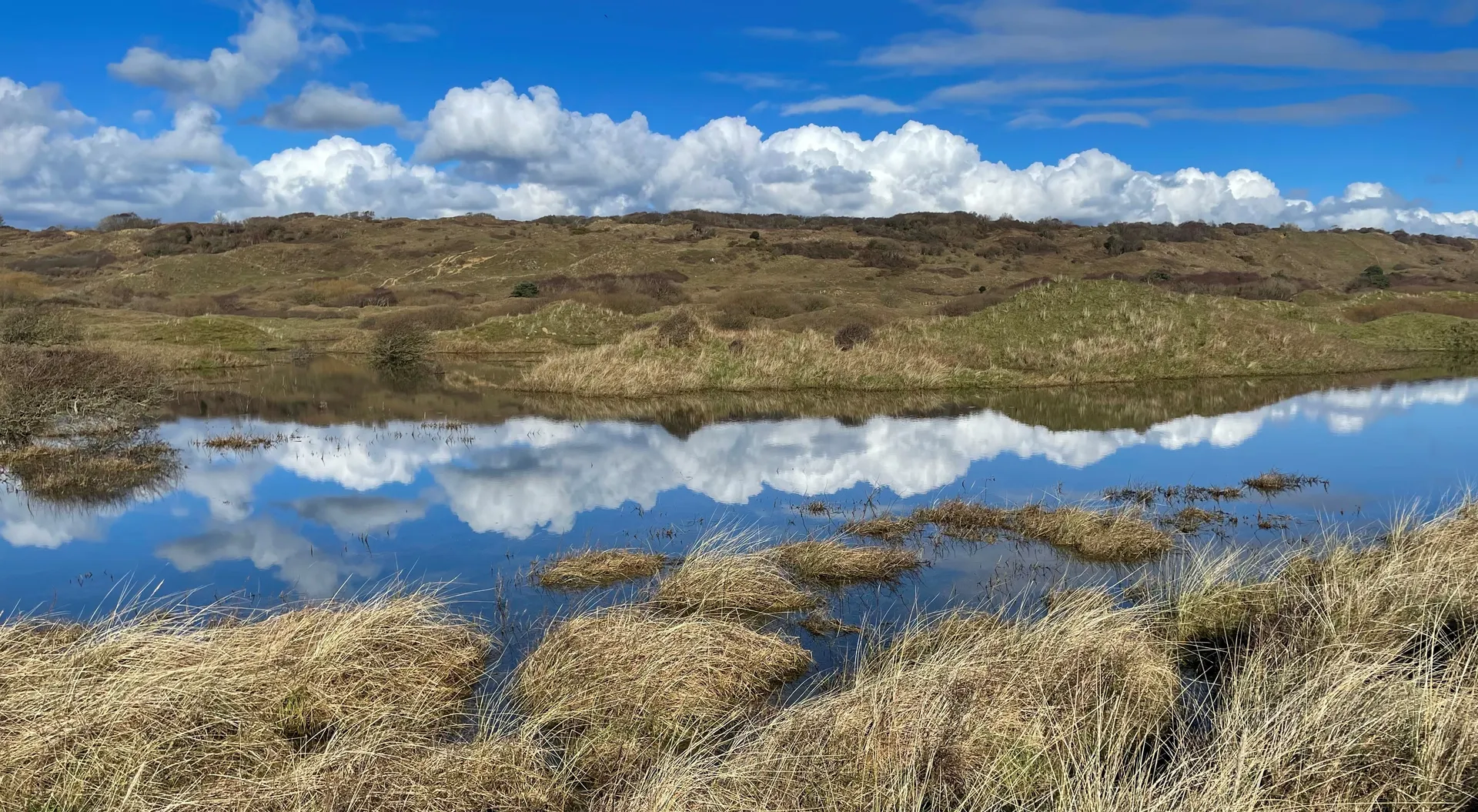
Seasonal Lakes
A rare karstic system of spring-fed seasonal lakes is one of the most unusual freshwater habitats in Wales.
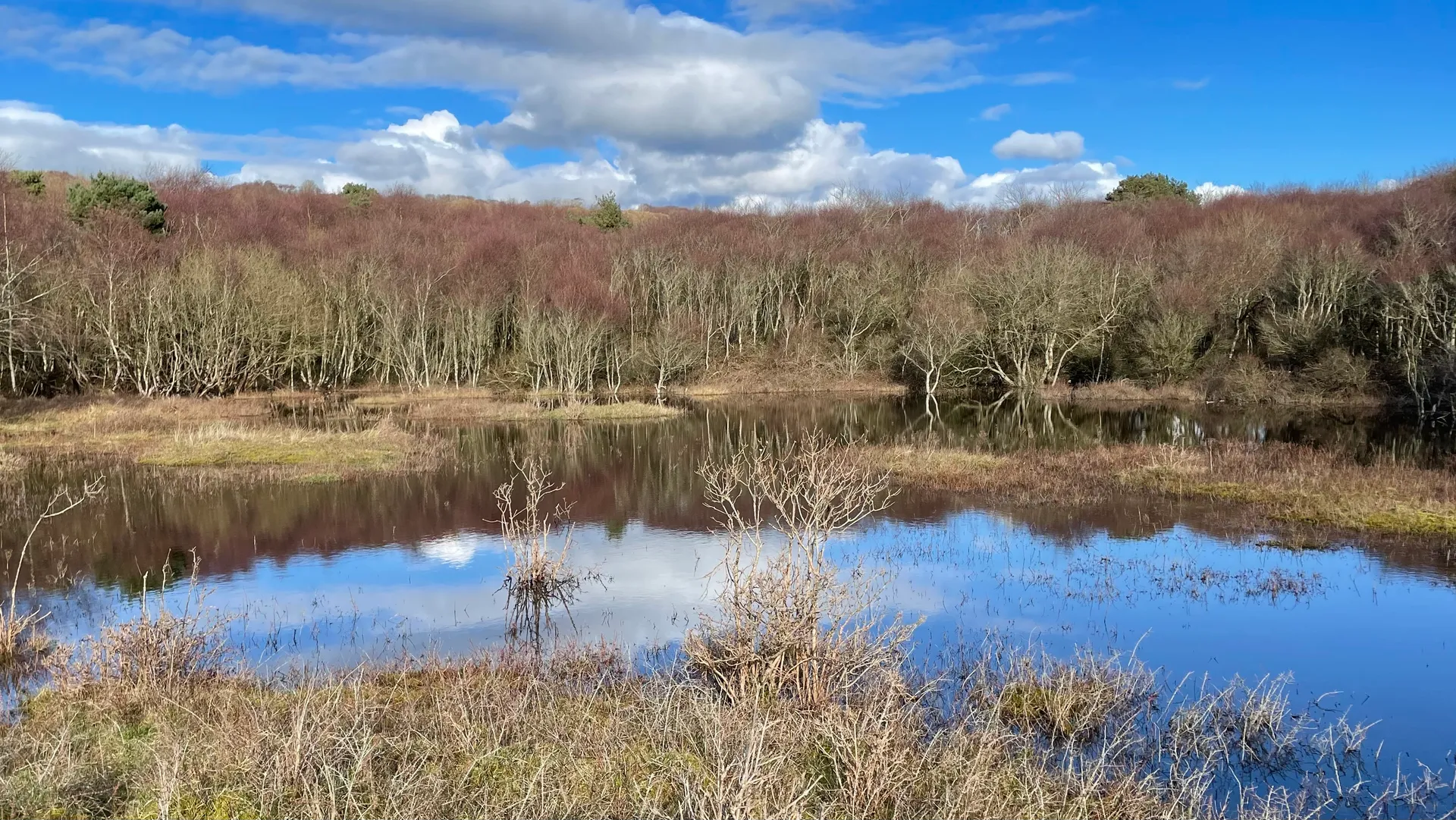
Dune Woodland & Scrub
Pioneering trees and shrubs sheltered by surrounding dunes provide a home for a range of birds, insects, and rare fungi.
Saltmarsh
An estuarine saltmarsh at the eastern end of the Reserve is a roosting and feeding site for a number of wading and migratory birds, while also providing a habitat for small mammals and amphibians.
Access & Parking
The main point of access is Candleston Car Park in Merthyr Mawr. An ANPR system operates at the car park. Season tickets can be purchased at the ticket machines, and toilet facilities are available on-site. Parking fees are reinvested directly into estate conservation.
How to Reach the Warren
Main Entrance
Candleston Car Park
Candleston, Ogmore-by-Sea, Vale of Glamorgan, CF32 0LS
What3Words:
sanded.hydration.bronzed
Ringo Location Code:
29531
Accessibility
Please note that the car park has an uneven surface. Paths across the Reserve are on sand and are unfortunately unsuitable for wheelchairs or mobility aids.
Postcode for GPS
CF32 0LS
Use this for sat-nav and directions apps.
Facilities
An information board in the car park provides details of walking routes as well as current and forthcoming activities, including guided walks. Information can also be found on our Facebook page.
There are toilet facilities on site.
Get in Touch
Merthyr Mawr App
You can download our app, which provides information about the Reserve together with some guided walks.
What to Bring
The Warren is an exposed coastal landscape. Weather can be unpredictable, so come prepared.
Sturdy Footwear
Uneven terrain and soft sand
Sun Protection
Sand reflects UV; bring sun cream and a hat, especially during summer months
Water Bottle
There is no drinking water beyond the car park